
When Sir David Attenborough turned 100 recently, I found myself reflecting less on his extraordinary age and more on his extraordinary influence. The power of One man and One voice. No protests. No scare tactics. Just curiosity, wonder and an invitation to care.
For more than seven decades he has quietly guided us through rainforests, oceans, deserts and frozen landscapes, introducing us to creatures and places most of us would never otherwise experience. From the first black-and-white wildlife broadcasts in the 1950s through to Planet Earth, Blue Planet and Our Planet, he didn’t just document the natural world – he changed how we see it.
He brought us close to things we might otherwise never encounter: emperor penguins braving Antarctic storms, deep ocean ecosystems glowing in the dark, forests pulsing with life we barely understand.
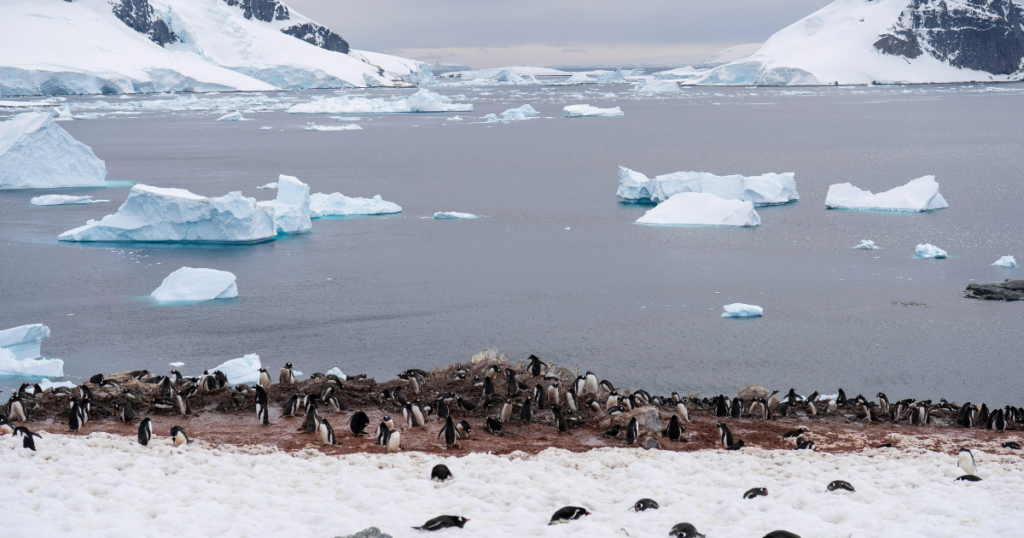
And he rarely began with what was broken. He began with what was beautiful. That’s why people listened. He made us fall in love before asking us to protect it.
In a world where communication often leans on fear, urgency and crisis, Attenborough chose something different. He did not ignore the fragility of the planet – far from it – but he framed it through awe first. Even as the science of biodiversity loss and climate change became more prominent and urgent, his tone remained grounded in something deeply human: connection.
It’s no accident that his work has influenced global conversations on plastic pollution, biodiversity and climate awareness. Blue Planet II alone is credited with what became known as the ‘Attenborough Effect’, sparking widespread public attention and shifts in behaviour around single-use plastics. His documentaries have not just informed audiences – they’ve moved them.
And increasingly, they have moved systems. Because when a voice that trusted speaks at scale, things shift.
Which brings me to the lesson for business.
If one man with a camera crew and a calm voice could influence millions, inspire behaviour change, and help shape public policy conversations around the world, imagine what organisations with far greater reach, resources and infrastructure could do.
Businesses have resources most individuals never will. Budgets. People. Supply chains. Technology. Distribution networks. Influence. And most importantly, the ability to normalise behaviour at scale.
Yet too often, social impact and sustainability still sit inside reporting cycles, compliance frameworks, or ESG scorecards – important, but contained.
Attenborough’s legacy asks something simpler, and more challenging: What if doing good wasn’t a requirement to meet… but a story worth telling?

Not because customers expect it. Not because employees demand it. Not because regulation requires it. But because business has an extraordinary capacity to shape culture when it chooses to.
This is personal for me too. In my twenties, I created a game for myself: to see all eighteen Wonders of the World during my lifetime. There are seven Ancient, seven Natural and seven Man-made Wonders – although three of the Ancient Wonders are no longer standing.
Even then, I was thinking about how much life I could fit into one lifetime. I remember thinking: if humanity has agreed these places are wondrous, why would I not go and see them?
So, I started travelling. Every time I boarded a plane, I tried to add another Wonder to the list. I’ve now seen twelve. I suspect David Attenborough had something to do with that.
His storytelling didn’t just show me the world – it shaped how I value it. And one moment in particular changed me forever.
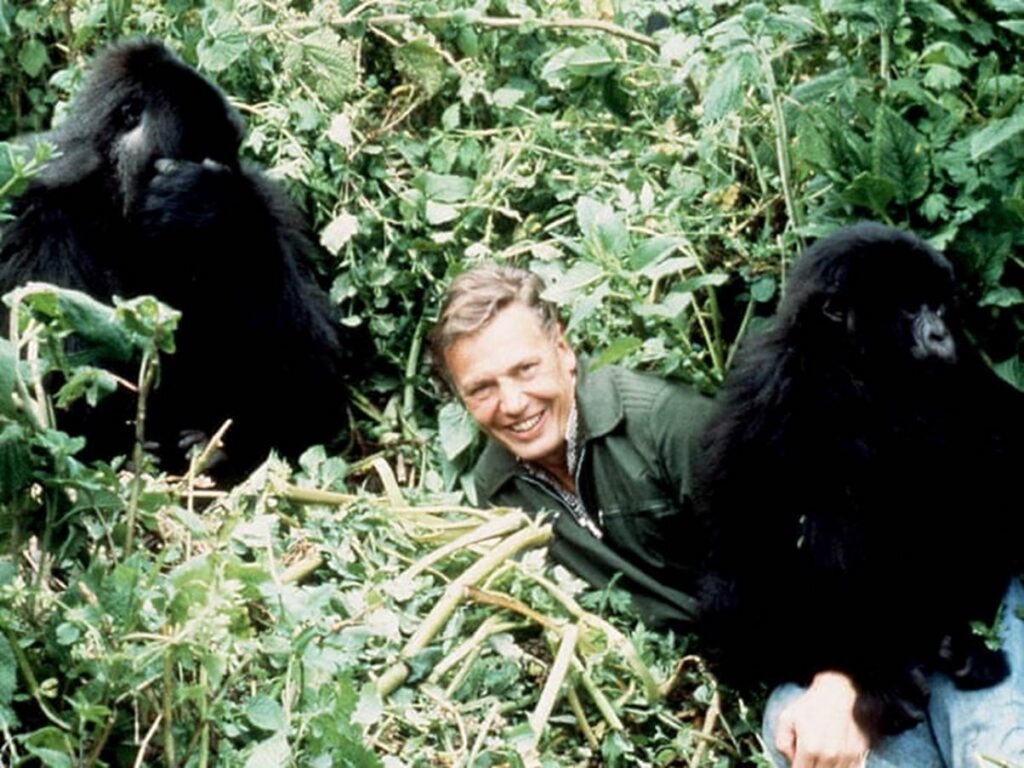
David Attenborough encounters mountain gorillas. Credit: The Guardian
Like Attenborough famously did, I sat with mountain gorillas in Rwanda whilst I was in Africa Wonder-hunting. Nothing quite prepares you for it. To sit just metres away from something so powerful, and yet so gentle and alert, is difficult to describe. Humbling, I think, is the best word.
After the long, arduous walk back to camp, I was changed. My priorities had changed. Career ambition, status, money – the usual markers of success – suddenly became meaningless. They stopped being my driving force – the centre of my story.
For someone climbing the ladder of the PR world, and with stints at Cosmo magazine, that shift was not subtle. Wonder has a way of doing that.
And that has always been Attenborough’s real gift. His mastery of storytelling. Because research[1] shows that emotional connection to nature precedes behavioural change. People don’t act because they’re told to care. They act because something in them already does.
At 100 years of age, Sir David Attenborough’s legacy reminds us that change does not always begin with louder voices. Sometimes it begins with deeper connection. And if one voice can do that – across generations, across continents – imagine what business could do.
Hailey Cavill-Jaspers